Trans Canada Trail Update

Trans Canada Trail Update

Article taken from the February 2016 Trans Canada Trail Newsletter, Trail Talk.

Trans Canada Trail

The TCT is proud to announce it will provide funding support for the Shubenacadie River Water Route in Nova Scotia which will become a part of the TCT in 2016. In an area known for its natural beauty, there is no better way to enjoy traveling though the Municipality of East Hants than on the historic Shubenacadie River, just as the Mi’kmaq and Acadians did centuries ago. Travelers will be treated to views of rolling farmland, sports fishermen casting their line and eagles perched at the river’s edge waiting for their next meal.  This 23.5 km of the Shubenacadie River will complete the gap in the Trans Canada Trail between Carroll’s Corner, Halifax County and Stewiacke, Colchester County. This water route will allow the residents to celebrate a river at the heart of their community and to share it with visitors from around the globe.

Three locations will provide access to the river’s edge, a staging area, a small amount of parking and a non-motorized boat launch / dock and will greatly increase the recreational use on the river. Kiosks will be installed at all three locations with information on local history, river information, and a TCT map. In addition to boat launch compatibilities, there will be picnic and restroom facilities and future development of walking trails. This will provide not just a great starting point on the river, but a rest location for travelers coming down the historic Shubenacadie Canal on their way to the sea.

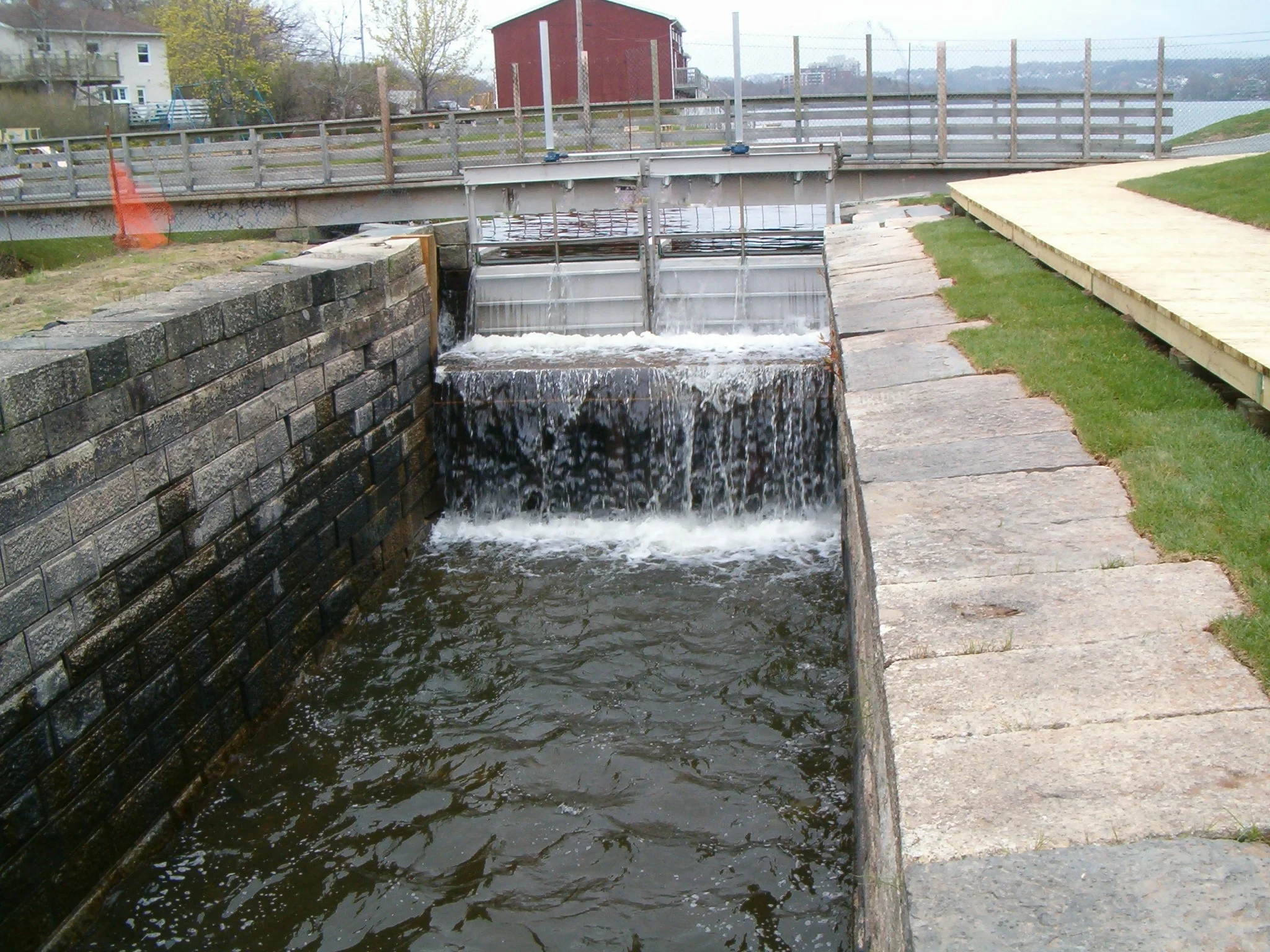
Craftsmanship of Canal stone masons can still be seen today.

Craftsmanship of Canal stone masons can still be seen today.

It is important to be aware that the people we are identifying in these brief articles were involved in the first version of the Canal (1826-1831) and while much of their work was made use of in the second and successful construction period (1856-1861) it is not likely many, if any, of these craftsmen took part. However, features of their work were included in the second version and thus their craftsmanship can still be seen. For example Lock 1 (as seen in the photo above) at the South end of Lake Banook made use of the granite stones which, we believe, were used in the first lock and the same is true of the east wall of Lock 2 in the Cut just beyond Lake Micmac.

When Canal construction ceased in 1831 some of the workers then got involved in other projects in the area. For example a few were hired to build what is now known as Henry House on Barrington St. in Halifax as well as a number of other stone buildings of the time. We don’t know if these specific people were among them but you may recognize the names of one of the stone masons: Timothy Common, James Conly, John Flavy and Phil Martin. If these do ring a bell, please contact us as we would very much like to find out more about them.

-Bernie Hart

canal worker_kennedy Is your last name Kennedy? If so, you may have been related to one of the Canal workers.

canal worker_kennedy Is your last name Kennedy? If so, you may have been related to one of the Canal workers.

One of the tragedies we read about in the Canal village at Port Wallace had to do with a lightning strike on one of the cottages. In this case the victim was Mr. Kennedy, a carpenter. It was late at night when the lightning occurred, apparently striking Kennedy and throwing him from his bunk. The others in the home were unable to revive him. When you next visit the park you can see the stone walls on the site where we believe this occurred. There is a sign marking the location on the west side of the Canal between Locks 2 and 3. Once again we are hoping someone will be able to identify this man as a relative. If you do, please let us know.

-Bernie Hart